
Economics Fundamentals
Understand core economic principles including scarcity, opportunity cost, and market dynamics.
- 25 hours
- Stage: University basics
- Language: English
- Voice: English ✔
What you will learn
- Define scarcity, choice and opportunity cost, and apply each to a real decision by naming what is given up when one option is chosen.
- Explain comparative advantage and specialization, and show with a numerical example how trade lets both parties gain even when one is better at producing everything.
- Identify the four factors of production (land, labor, capital, entrepreneurship) and the income each one earns, using a real business as the example.
- Compare economic systems (market, command, mixed, traditional) on who decides what to produce, how and for whom, citing the strengths and weaknesses of each.
- Compare major schools of thought (classical, Keynesian, monetarist, Austrian, new classical) on government intervention and market dynamics, and predict the policy response each would favor in a recession.
- Describe market structures (perfect competition, monopoly, oligopoly) by number of sellers, product type, barriers to entry and pricing power, giving a real industry example of each.
- Analyze demand curves and the law of demand, separating a movement along the curve from a shift caused by income, tastes, related goods, expectations or the number of buyers.
- Analyze supply curves and the law of supply, separating a movement along the curve from a shift caused by input costs, technology, taxes, subsidies or the number of sellers.
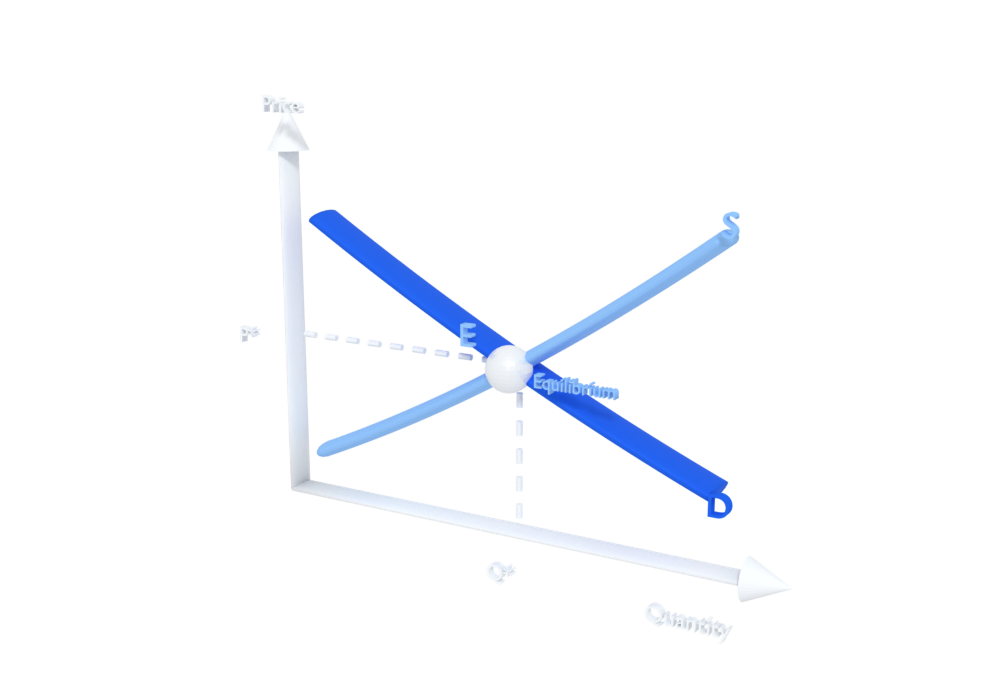
- Determine market-equilibrium price and quantity from supply and demand schedules or equations, and assess how shifts in either curve change both.
- Evaluate the effects of price controls (ceilings, floors) on shortages, surpluses and deadweight loss, using a rent cap and a minimum wage as worked examples.
- Assess consumer surplus, producer surplus and overall welfare impacts by measuring the areas on a supply and demand graph before and after a policy or market change.
Syllabus
Module 1Thinking Like an Economist3 hours
Positive vs normative claims · scarcity and choice · opportunity cost · marginal thinking
- Facts versus opinions: positive and normative statements
- The two-question test for any claim
- Sorting claims in news reports and policy debates
- Scarcity, choice and opportunity cost
- An opportunity cost worksheet
- A real decision: rent a shop or keep the savings
- Marginal benefit and marginal cost
- A decision table for one more unit
- Should the cafe open one more hour?
Module 2Trade-offs, Incentives and Trade3 hours
Production possibilities frontier · growth and technology · incentives · comparative advantage · gains from trade
- The production possibilities frontier
- Drawing a frontier from a table of choices
- Growth, technology and a shifting frontier
- Incentives: why people respond to costs and benefits
- Reading prices, taxes and subsidies as incentives
- Everyday cases: a bottle deposit, a fuel tax, free delivery
- Absolute and comparative advantage
- A numerical example: two producers, two goods
- A reusable gains-from-trade template
Module 3Resources, Flows and Economic Systems3 hours
Land, labor, capital, entrepreneurship · factor incomes · circular flow · market, command, mixed and traditional systems
- The four factors of production
- A factors-and-incomes template for any business
- A neighborhood bakery, factor by factor
- The circular flow of income and spending
- Drawing your own circular flow diagram
- Following one purchase through the economy
- What, how and for whom: the three questions
- Comparing the four systems side by side
- Where real economies sit on the map
Module 4Demand and Supply3 hours
Law of demand · demand shifts · law of supply · supply shifts · equilibrium price and quantity
- The law of demand and the demand curve
- Movement along the curve or a shift of the curve?
- A real market case: umbrellas on a rainy day
- The law of supply and the supply curve
- Movement or shift? Input costs, technology and taxes
- A real market case: a bakery when flour costs more
- Equilibrium: where supply meets demand
- Solving for equilibrium with equations
- What happens to price and quantity when a curve shifts
Module 5Markets in Motion3 hours
Shortages and surpluses · adjustment to equilibrium · common reasoning errors · a supply and demand model in a spreadsheet
- Shortages, surpluses and the push to equilibrium
- An adjustment log: step by step to a cleared market
- A real case: unsold fruit at the end of the day
- Common errors in economic reasoning
- An error-spotting checklist
- Finding the mistake in claims from the news
- Setting up a supply and demand model
- Finding equilibrium with spreadsheet formulas
- Testing a cost shock, a taste change and a new tax
Module 6Welfare and Government Intervention3 hours
Consumer and producer surplus · welfare · price ceilings and floors · deadweight loss · efficiency and fairness
- Consumer surplus and producer surplus
- Measuring the areas on a graph
- Who gains and who loses when a market changes
- Price ceilings and price floors
- Worked example: a rent cap
- Worked example: a minimum wage
- Efficiency and fairness: two goals that can clash
- A tax worked through with numbers
- A trade-off scorecard for a policy
Module 7Market Structures and Schools of Thought3 hours
Perfect competition · monopoly · oligopoly · monopolistic competition · classical, Keynesian, monetarist, Austrian and new classical views
- Perfect competition, monopoly and oligopoly
- A market structure comparison grid
- One real industry for each structure
- Monopolistic competition: many sellers, different products
- A four-question test for any market
- Restaurants and clothing shops up close
- Five schools of thought on one map
- How each school sees markets and government
- A recession response table: who would do what
Module 8Evidence, Real Cases and What Comes Next4 hours
Public data sources · charts that support an argument · a specialization case · a news case · links to later courses
- Where basic economic data comes from
- Downloading and charting a data series
- From chart to short written argument
- Opportunity cost as the guide to who makes what
- Building an opportunity cost table for two real producers
- Who should make what? A specialization case
- From news story to model: a five-step method
- Drawing the shift and explaining it
- Writing the one-page explanation
- From this course to Microeconomics Explained
- From this course to Macroeconomics Explained
- Your tool map and study plan