
Finance Fundamentals
Master core finance concepts: time value, budgeting, risk vs. return and business-financial logic.
- 23 hours
- Stage: University basics
- Language: English
- Voice: English ✔
What you will learn
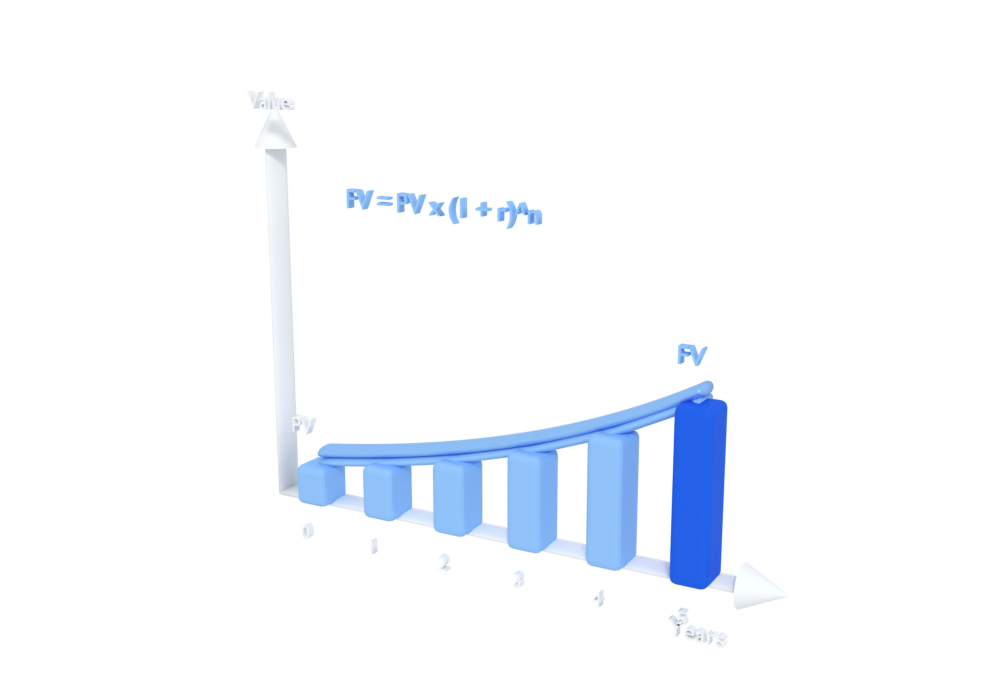
- Calculate present value (PV) and future value (FV) for single and multiple cash-flow streams, including annuities and perpetuities, using formulas, tables and spreadsheet functions.
- Apply internal rate of return (IRR) and net present value (NPV) for project appraisal, accepting or rejecting projects against a required return and explaining what each result means.
- Develop and manage operating and capital budgets by setting targets, tracking actual results against plan and explaining variances to budget owners.
- Compare investments using basic risk-return metrics (standard deviation, Sharpe ratio), and explain why a higher expected return normally comes with higher risk.
- Explain business-case logic with clear costs, benefits and assumptions, and perform breakeven analysis to show the volume and revenue at which an initiative pays for itself.
- Interpret cash-flow drivers and working-capital cycles, including receivable, inventory and payable days, to explain why a profitable business can still run short of cash.
- Construct pro-forma income statements and balance sheets from stated assumptions, and confirm that the balance sheet balances and links to the projected cash position.
- Evaluate funding options: equity vs. debt, by comparing cost, control, repayment duties, tax treatment and effect on financial risk.
- Explain the role of financial markets and intermediaries, including how they channel savings to borrowers, set prices and provide liquidity and risk sharing.
- Communicate financial concepts to non-finance stakeholders in plain language, using simple tables, charts and a worked example that supports a clear decision.
Syllabus
Module 1The Time Value of Money3 hours
Why sooner is worth more · risk and return · present and future value · annuities and perpetuities · nominal, effective and real rates
- Why money today is worth more than money later
- Risk and return — why higher risk asks for higher return
- Real-life choice: a discount for paying early
- Future and present value of a single amount
- Annuities, perpetuities and uneven cash-flow streams
- Worked case: valuing a shop lease in a spreadsheet
- Nominal and effective rates — what compounding does
- Real rates — taking inflation out of the return
- Reading the rate in a real loan or savings offer
Module 2Time Value in Practice3 hours
Spreadsheet functions · checking by hand · loan schedules · interest and principal · common mistakes and the checklist
- The spreadsheet functions: PV, FV, NPV, IRR, RATE and PMT
- Checking every result against a hand calculation
- Worked example: pricing a loan offer in a spreadsheet
- How a loan works — interest, principal and the balance
- Building an amortization schedule step by step
- Case: an equipment loan over its whole life
- Why time-value errors happen
- The time-value checklist — rates, periods and timing
- Spot the mistake: three flawed calculations
Module 3Costs, Break-even and Budgets3 hours
Fixed, variable and semi-variable costs · contribution margin · the business case · break-even · budgets and variances
- Fixed, variable and semi-variable costs
- Contribution margin — what each sale leaves for fixed costs
- Case: a price and volume decision in a small business
- The business case — costs, benefits and assumptions
- Break-even in units and in revenue
- Case: should the new service launch?
- Operating and capital budgets — purpose and structure
- Setting targets and tracking actual against plan
- Variance analysis — explaining the gap to a budget owner
Module 4Financial Markets and Funding3 hours
Savers and borrowers · intermediaries · prices and liquidity · loans, bonds and shares · equity versus debt
- What financial markets do — from savers to borrowers
- Prices, liquidity and risk sharing
- Real-life example: a bank deposit that becomes a business loan
- Loans, bonds and shares — the claim on cash flows
- The risk and the typical holders of each instrument
- Comparison table: one company funded three ways
- Equity versus debt — cost and control
- Repayment duties, tax treatment and financial risk
- Case: choosing how to fund a growth plan
Module 5Risk, Return and Project Appraisal3 hours
Expected return and variance · diversification · standard deviation · Sharpe ratio · NPV and IRR decisions
- Expected return and variance from scenarios
- Diversification — a two-asset example
- Case: savings in one share or in two
- Standard deviation as a measure of risk
- The Sharpe ratio — return for each unit of risk
- Comparison table: three investments side by side
- Net present value — the decision rule
- Internal rate of return — what it means and how to find it
- Case: appraising a machine purchase with NPV and IRR
Module 6Cash, Working Capital and Cash Forecasts3 hours
Cash-flow drivers · receivable, inventory and payable days · cash conversion cycle · rolling forecast · funding gaps
- What drives cash in and out of a business
- Working capital — receivables, inventory and payables
- Why a profitable business can still run out of cash
- The cash conversion cycle — the idea and the formula
- Shortening the cycle — faster collection, tighter stock
- Case: a wholesaler that frees cash without new funding
- What a rolling cash forecast shows and why it is updated
- Building a weekly rolling cash forecast in a spreadsheet
- Spotting a funding gap early and arranging financing
Module 7Projections, Case Study and Plain Talk3 hours
Pro-forma income statement · pro-forma balance sheet · balance check · growth cash case · plain-language tables and charts
- From assumptions to a pro-forma income statement
- The pro-forma balance sheet and the balancing check
- Worked case: projecting a growing retailer and its cash
- The case: a growing business that runs short of cash
- Tracing the cause — working capital and budget variances
- Funding choices and the recovery plan
- Plain-language finance — from jargon to clear words
- Simple tables and charts that make the point
- A worked example that supports a clear decision
Module 8Honest Reporting and What Comes Next2 hours
Balanced presentation · conflicts of interest · bias in numbers · links to analysis, capital budgeting and valuation · the next step
- Honest and balanced presentation of results and forecasts
- Conflicts of interest — how bias enters the numbers
- Case: a forecast written to please — review and rewrite
- How the course tools lead into statement analysis
- How the course tools lead into capital budgeting and valuation
- Choosing your next study step for a stated goal