
Marketing Strategy Essentials
Master offline marketing—market scans, segmentation, targeting, positioning, mix and measurement.
- 27 hours
- Stage: University basics
- Language: English
- Voice: English ✔
What you will learn
- Perform PESTEL (environment) and Porter’s Five Forces (industry) analyses and summarize the opportunities and threats they reveal for a marketing plan.
- Conduct a SWOT, map competitors and assess their strengths and weaknesses, then compare their offers, prices and messages.
- Segment markets by demographic, psychographic and behavioral bases, adding geographic and firmographic bases where relevant, and test that each segment is measurable, reachable and large enough.
- Select target segments and craft positioning statements using the STP process, checking that each statement is distinct, credible and relevant to the chosen customers.
- Define product strategy, covering lifecycle stages and a development roadmap, and explain how product, brand and packaging decisions support the positioning.
- Set pricing objectives and analyze pricing situations, comparing cost-based, competition-based and value-based approaches.
- Choose distribution channels and design a sales funnel, comparing direct and indirect routes by cost, reach and control.
- Establish communication objectives, key messages, channels and budgets, and align them into a coordinated plan for each target segment.
- Measure campaign performance with KPIs (sales, market share, ROI) by comparing results with targets and explaining the gaps.
- Design customer-relationship and revenue-stream models that show how each segment is acquired, retained and monetized over time.
Syllabus
Module 1Marketing Foundations3 hours
What marketing decides · the four Ps · the extended mix for services · how buyers decide · basic research
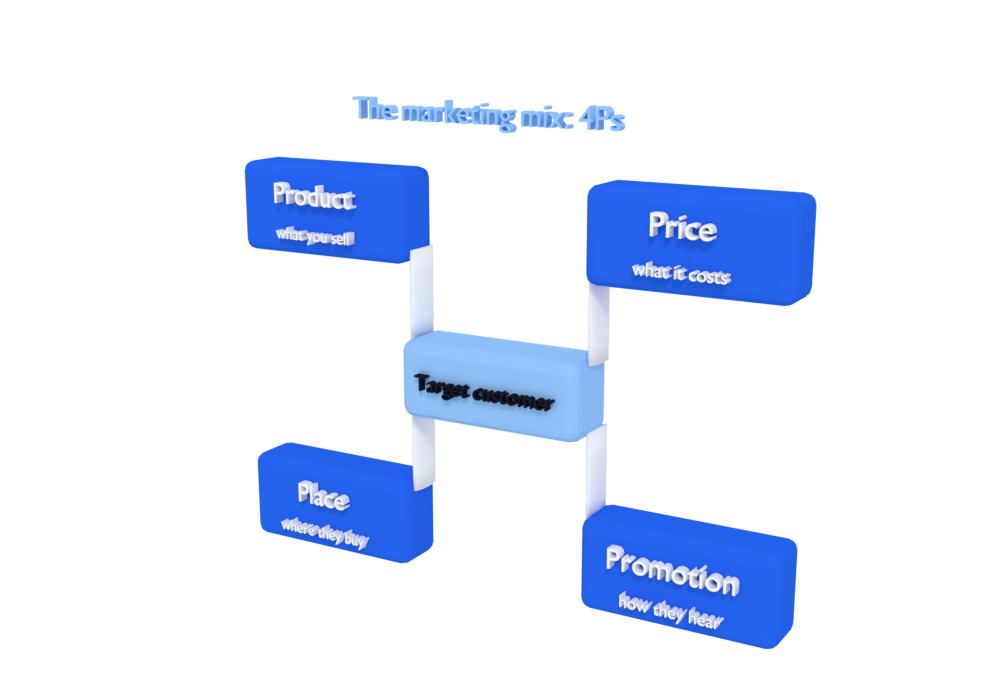
- The four Ps — what each one decides
- The extended mix — people, process, physical evidence
- Making the mix fit together — a corner café
- Why people buy — needs, motives and influences
- The stages of the buying decision
- Business buyers — longer, shared, more careful
- Asking the right question — the research question
- Primary and secondary sources — what to use and when
- Drafting a survey and interview guide for a local shop
Module 2Reading the Market and the Customer3 hours
PESTEL · Porter’s Five Forces · SWOT · competitor maps · the customer journey
- PESTEL — the outside environment
- Porter’s Five Forces — pressure inside an industry
- From analysis to opportunities and threats
- SWOT — separating inside from outside
- Mapping competitors on one page
- Comparing offers, prices and messages in a local market
- The customer journey — from first need to loyalty
- Building a journey map step by step
- Finding the moments that matter most
Module 3Segmentation, Targeting and Positioning3 hours
Segmentation bases · segment tests · choosing targets · positioning statements · value proposition · brand identity
- Why we segment — one market, many needs
- Bases for segmenting — who they are and how they act
- Testing a segment — measurable, reachable, large enough
- The STP process — segment, target, position
- Choosing target segments
- Writing a positioning statement and checking it
- What a value proposition promises
- Brand identity — name, promise, personality, tone
- A value proposition and identity for a local bakery
Module 4Product and Pricing3 hours
Product lifecycle · development roadmap · brand and packaging · pricing objectives · three pricing approaches · pricing tactics
- The product life cycle — from launch to decline
- Building a product development roadmap
- Product, brand and packaging that support the positioning
- What pricing is for — objectives and price sensitivity
- Cost-based, competition-based and value-based pricing
- Analyzing a pricing situation
- Skimming and penetration — two ways to enter
- Bundling and discounting
- Choosing the right pricing tactic for a situation
Module 5Place and Promotion3 hours
Distribution channels · direct and indirect routes · the sales funnel · the promotion mix · point of sale · trade promotions
- Distribution channels — how products reach customers
- Direct or indirect — cost, reach and control
- Designing a sales funnel
- The promotion mix — six tools and what each does
- Matching promotion tools to a target segment
- Justifying a promotion mix for a local launch
- Why the shelf and the shop floor matter
- Planning in-store and point-of-sale activity
- Trade promotions with retailers and distributors
Module 6Messages, Relationships and Why It Works3 hours
Communication objectives · key messages and budgets · customer relationships · revenue streams · why the tools work
- Communication objectives — what a message must change
- Key messages, channels and budgets by segment
- Aligning one coordinated communication plan
- Acquire, retain, monetize — the customer relationship
- Revenue-stream models — one-off, repeat and subscription
- A relationship and revenue model for a language school
- Buyer needs and differentiation — why positioning works
- Price sensitivity — why the same price feels different
- Message and behavior — why the mix works together
Module 7Numbers, Budgets and Results3 hours
Unit contribution · break-even volume · campaign return · budget methods · KPIs · explaining gaps
- Unit contribution — what each sale leaves behind
- Break-even volume
- Campaign return — was the spend worth it?
- Why budgets are set the way they are
- Setting a budget with each method
- Choosing a budget method for a small business
- KPIs — sales, market share and ROI
- Comparing results with targets
- Explaining the gap
Module 8Planning, Ethics and Common Mistakes3 hours
The one-page plan · ethical claims · fair pricing · customer privacy · vulnerable groups · common mistakes
- What a marketing plan must join together
- The one-page marketing plan template
- Checking a plan for gaps
- Why ethics matter in marketing
- Applying ethical principles to claims, prices and data
- Targeting with care — vulnerable groups
- Why marketing mistakes happen
- A mistake checklist for your plan
- Fixing a mistake — a real-life example
Module 9Integration and Real-Life Practice3 hours
Offline and digital together · judging a real case · a local product plan · presenting and defending choices
- How offline and digital channels reinforce each other
- Connecting channels in one integrated plan
- Where to deepen digital skills next
- A frame for judging a case
- Analyzing a real brand or campaign
- What worked and why
- Choosing a local product and gathering public data
- Filling the marketing plan template
- Defending your choices in a short presentation