
Product Owner Essentials
Own backlog, write high-value stories and prioritize across Scrum, Kanban & Lean.
- 20 hours
- Stage: First job: projects, agile, product
- Language: English
- Voice: English ✔
What you will learn
- Define the Product Owner (PO) role in Scrum, Kanban and Lean, including its accountabilities, decision rights and how it differs from a project manager or business analyst.
- Write clear user stories with testable acceptance criteria, using the As a, I want, so that form and the INVEST checklist to check quality.
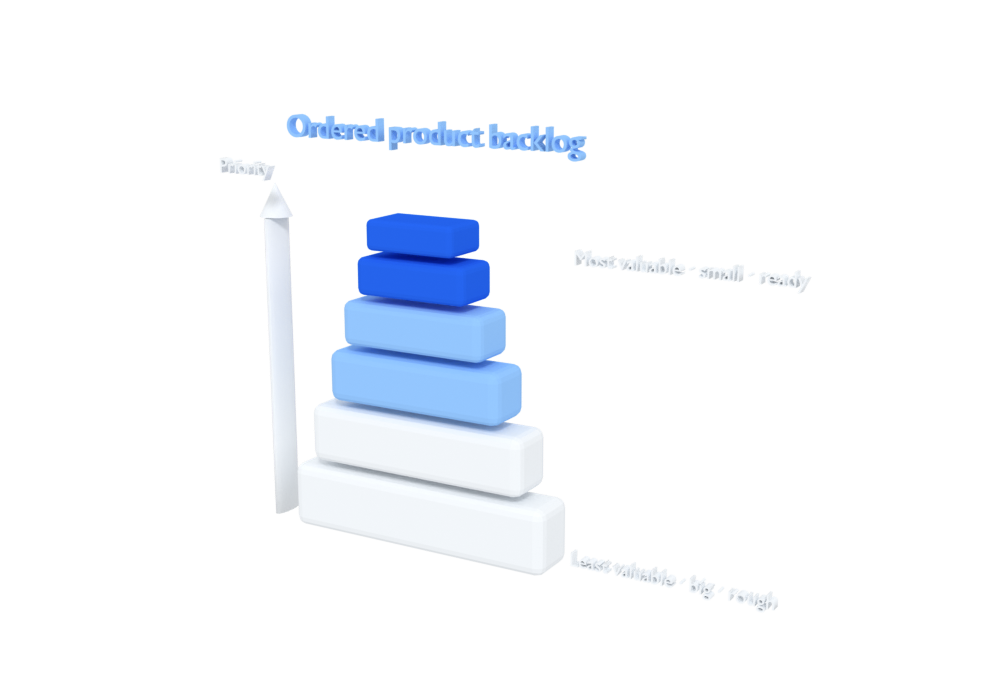
- Prioritize backlog items by business value and risk, using simple techniques such as MoSCoW and value-versus-effort ranking, and explain the ordering to stakeholders.
- Collaborate effectively with stakeholders and delivery teams through regular conversation, clear shared goals and transparent communication of decisions, trade-offs and progress.
Syllabus
Module 1The Product Owner Role and Lean Ideas3 hours
What a Product Owner does · accountabilities and decision rights · PO vs project manager vs business analyst · small batches and fast feedback · Kanban board and WIP limits
- What a Product Owner is and why the role exists
- Accountabilities and decision rights in practice
- Product Owner, project manager and business analyst side by side
- Why small batches reduce waste and risk
- Fast feedback: putting work in front of users early
- Example: one big release versus five small ones
- Flow, queues and why work gets stuck
- Setting up a Kanban board with WIP limits
- Example: clearing a jammed board
Module 2Vision, Goals and Users3 hours
Product vision · Product Goal · personas · user journeys · stakeholder map · communication approach
- What a product vision and a Product Goal are
- Writing a vision and Product Goal statement
- Example: turning a vague goal into a clear one
- Why we start from the user: personas explained
- Drawing a simple user journey
- Example: checking backlog items against a persona
- Who stakeholders are and why they matter
- The interest and influence grid in practice
- Example: a stakeholder map for a new feature
Module 3Writing Clear User Stories3 hours
As a, I want, so that · INVEST checklist · testable acceptance criteria · Given-When-Then · reviewing before planning · rework from vague stories
- What a user story is and why it has this form
- Checking stories with the INVEST checklist
- Example: turning a feature request into a good story
- Why acceptance criteria give one meaning of done
- Given-When-Then in practice
- Example: reviewing the criteria for a password-reset story
- How vague stories cause rework
- Case: a vague export story that was built twice
- Rewriting the story with testable criteria
Module 4Building and Ordering the Backlog3 hours
DEEP backlog · removing duplicate and outdated items · Jira or Trello setup · fields, labels, ordering rules · value and risk · MoSCoW and value versus effort
- What a Product Backlog is and what DEEP means
- Structuring the backlog: detail at the top, ideas below
- Example: cleaning a backlog of duplicate and outdated items
- Why one visible backlog tool helps the whole team
- Setting up Jira or Trello: fields, labels, ordering rules
- Example: agreeing the backlog rules with the team
- Value and risk: the two questions behind every order
- MoSCoW and value-versus-effort ranking in practice
- Example: explaining the order to stakeholders
Module 5Refinement, Planning and Review3 hours
Backlog refinement · splitting stories vertically · preparing Sprint Planning · Sprint Goal · reviewing against criteria · Definition of Done
- Why large stories hide risk and how thin slices help
- Running a backlog refinement session
- Example: splitting one large story into thin slices
- What Sprint Planning needs from the Product Owner
- Preparing: ordered backlog, draft Sprint Goal, open questions
- Example: answering the team's questions about business intent
- Acceptance criteria and the Definition of Done compared
- Reviewing finished items during the Sprint
- Example: giving timely, useful feedback to the team
Module 6Working With People and Change3 hours
Regular conversation · shared goals · open communication of trade-offs · urgent requests · common Product Owner mistakes · corrective habits
- Why collaboration beats hand-offs
- Habits that keep stakeholders and the team in step
- Example: sharing a hard trade-off in plain words
- Why an urgent request is a trade-off, not a yes or no
- A routine for urgent requests: value, effort, Sprint Goal
- Example: a senior manager asks for a change mid-Sprint
- Three common Product Owner mistakes
- Example: a story written as a technical task
- Corrective habits and a weekly self-check
Module 7Honest Decisions and the Next Level2 hours
Transparent decisions · recording reasons · not promising what is not committed · working across teams · skills that carry over · a growth plan
- Why open decisions build trust
- Making and recording backlog decisions
- Example: answering a request for a date nobody has committed to
- From one team to several: what changes
- The skills that carry over to a bigger role
- Example: building your own growth plan