
Foundations of Product Management & Product Lifecycle
Understand the Product Manager role end-to-end, how it collaborates with Product Owners, Project Managers, Scrum Masters & Agile teams, and the core models for teams, products and portfolios.
- 24 hours
- Stage: First job: projects, agile, product
- Language: English
- Voice: English ✔
What you will learn
- Describe the Product Manager persona—responsibilities, key skills, business acumen—and explain how it collaborates with Product Owners and Project Managers through a worked example of shared decisions.
- Summarize Scrum, Kanban and Lean from a Product Manager’s viewpoint, compare when each fits best, and map Scrum ceremonies to Product Manager deliverables.
- Define product management versus project management versus business analysis, and compare their goals, outputs and decision rights using one product example.
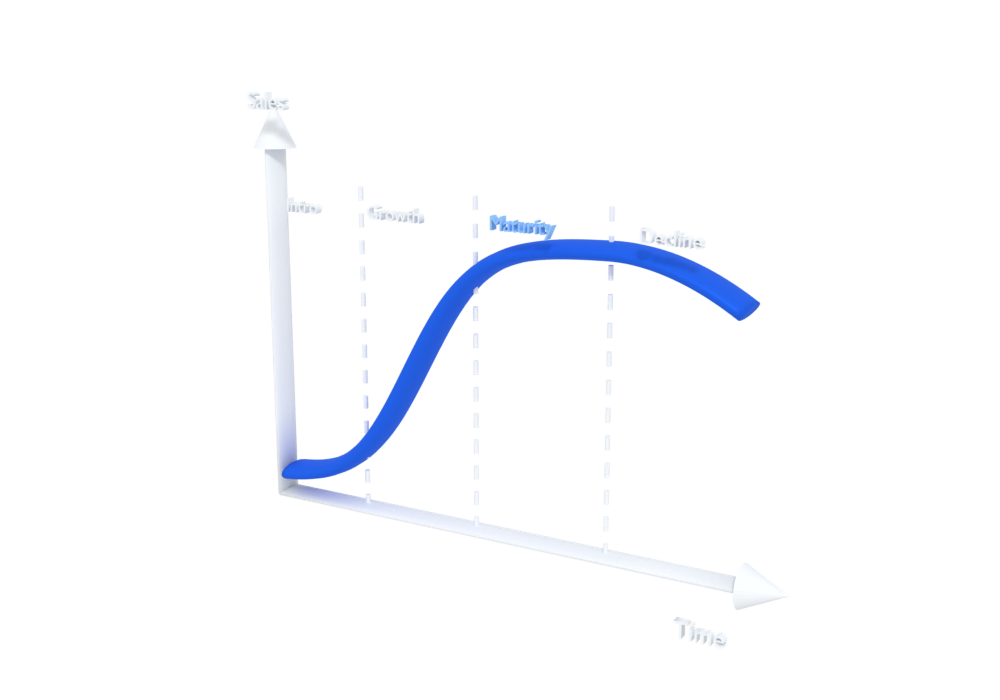
- Analyze the Product Lifecycle (Introduction → Growth → Maturity → Decline) against the Product Management Lifecycle (Conceive → Plan → Develop → Qualify → Launch → Deliver → Retire) and show how they align.
- Map Product Manager success factors (goals, deliverables, metrics) to each lifecycle phase and justify which metrics matter most at each stage.
- Explain team-building models: Tuckman’s Forming-Storming-Norming-Performing and Lencioni’s Five Dysfunctions of a Team, and use them to diagnose which stage or dysfunction a given team shows.
- Apply Kotler’s Five Levels of a Product to define core versus peripheral offerings and show how each level adds customer value.
- Outline portfolio-management goals, roles and objectives at portfolio, program and product levels, and explain how a Product Manager contributes at each level.
Syllabus
Module 1What Product Management Is3 hours
Why product management exists · the Product Manager persona · skills and business acumen · product vs project vs business analysis · decision rights
- Why products fail and how management cuts uncertainty
- Customer value and trade-offs in every product choice
- Evidence or opinion — one decision, two ways
- The Product Manager persona — duties and skills
- A persona sheet you can fill in
- Shared decisions with the Product Owner and Project Manager
- Three disciplines — product, project and business analysis
- Goals, outputs and decision rights side by side
- One product, three roles — a worked example
Module 2The Product and Its Lifecycle3 hours
Kotler’s five levels · core and peripheral offerings · physical, digital, service and platform products · two lifecycles on one timeline
- Kotler’s five levels — from core benefit to potential product
- Core and peripheral offerings — a sorting worksheet
- Level by level — how a food-delivery app adds value
- Physical, digital, service and platform products
- How practice differs by product type
- One idea in four forms — a worked comparison
- The Product Lifecycle — Introduction to Decline
- The Product Management Lifecycle — Conceive to Retire
- Putting both lifecycles on one timeline
Module 3Measuring Success and Learning3 hours
Outputs and outcomes · vanity measures · Build-Measure-Learn · testable assumptions · success factors by lifecycle phase
- Outputs and outcomes — what you ship and what changes
- Choosing a small, balanced set of metrics
- A misleading dashboard — a worked example
- The Build-Measure-Learn loop explained
- From idea to testable assumption — a template
- Running a small test — a worked example
- Success factors — goals, deliverables and metrics
- Which metrics matter most at each stage
- A one-page success map for one product
Module 4Ways of Working and Roles3 hours
Scrum, Kanban and Lean · ceremonies and deliverables · working with other functions · RACI
- Scrum, Kanban and Lean — the core ideas
- When each approach fits best
- Mapping Scrum ceremonies to Product Manager deliverables
- Working with engineering and design
- Working with sales, marketing, support and finance
- A day in the life — a worked example
- Responsibility matrices — what RACI means
- Building a RACI for a sample product
- Fixing a muddled RACI — a worked example
Module 5Teams and Stakeholders3 hours
Tuckman’s stages · Lencioni’s dysfunctions · team charter · influence and interest grid · communication plan
- Tuckman’s four stages of team growth
- Lencioni’s Five Dysfunctions of a Team
- Diagnosing a team — a worked example
- What a team charter is and why teams need one
- Writing the charter — purpose, agreements, rules, rhythm
- Planning a new team’s first weeks with Tuckman
- Who are your stakeholders — influence and interest
- How to engage each stakeholder group
- A communication plan — audience, message, channel, frequency
Module 6Vision, Portfolio and Workspace3 hours
Vision and strategy · the one-page statement · portfolio, program and product levels · backlog, roadmap and decision log
- Vision and strategy — what each one is
- The one-page vision and strategy template
- Testing a vision statement — a worked example
- Portfolio, program and product — three levels
- Roles and objectives at each level
- Where the Product Manager contributes — a worked example
- What a product workspace needs
- Setting up the workspace in a work-tracking tool
- Filling the workspace — a sample product example
Module 7Professional Practice and Growth3 hours
Common new-manager mistakes · habits that prevent them · ethical duties to users · competencies · a development plan
- Jumping to solutions and other classic mistakes
- A plan is not a strategy — and why alignment matters
- Habits that prevent mistakes — a checklist
- Ethical duties of a Product Manager to users
- Data, accessibility and manipulative design
- An ethics check for a release — a worked example
- The Product Manager competency areas
- Rating your own skills — a self-assessment template
- Your development plan — specific learning actions
Module 8Putting the Foundations to Work3 hours
Reading lifecycle stage from evidence · actions that fit each stage · the product brief · the road ahead
- Reading a product’s lifecycle stage from the evidence
- Product Manager actions that fit each stage
- A real-life case across all four stages
- What goes into a product brief
- Drafting the brief in a document or tracking template
- Reviewing the brief with stakeholders
- From foundations to market study and requirements
- From foundations to launch and post-launch work
- Your learning map for what comes next