
Relative Valuation Methods, Comparable & Transaction Multiples Valuation
Apply relative valuation techniques using trading and transaction multiples, and APV adjustments.
- 25 hours
- Stage: First job: finance, banking, risk
- Language: English
- Voice: English ✔
What you will learn
- Select an appropriate peer universe for trading-multiples analysis using business model, size, growth, margin, geography and risk screens, and document why each company is included or excluded.
- Normalize financials (non-recurring items, capital structure) for comparability, adjusting reported earnings, debt-like items and accounting differences so that peers are measured on the same basis.
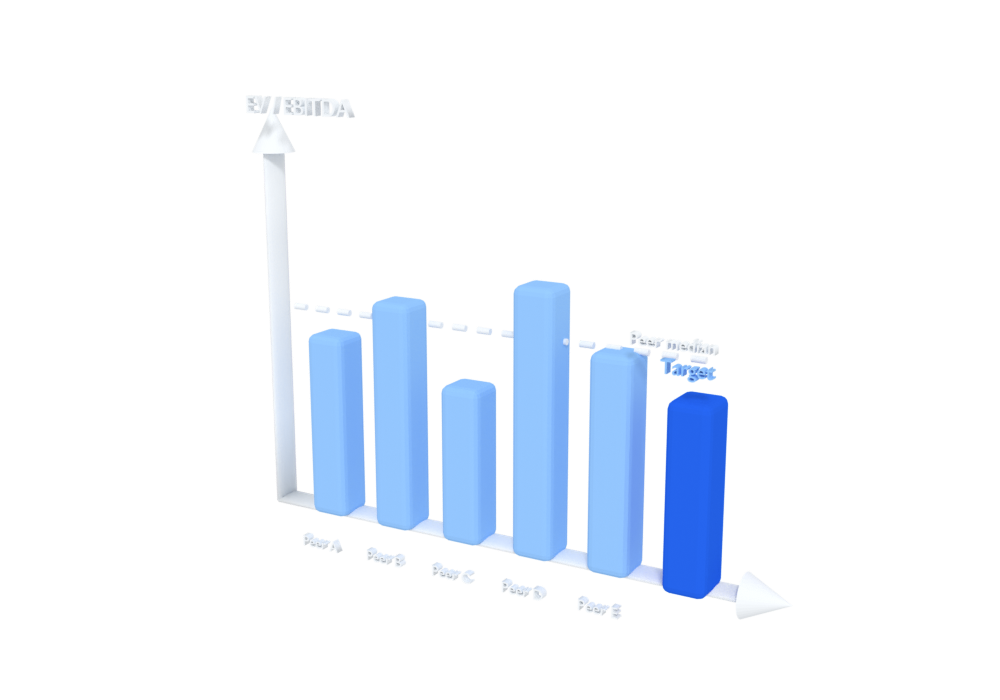
- Calculate and interpret key multiples (EV/EBITDA, P/E, EV/Sales), explaining what each measures, when it is useful and where it misleads.
- Conduct precedent-transaction analysis and derive control premia by selecting relevant past deals, calculating deal multiples and separating the premium paid for control from the underlying value.
- Build APV models to separate financing and operating effects by valuing the business without debt and adding the value of tax shields and other financing side effects.
- Adjust multiples for growth, margin and leverage differentials using ratio adjustments or regression against these drivers, and test whether the adjustment improves comparability.
- Benchmark valuation across sectors and size buckets, explaining why multiples differ with risk, growth, capital intensity and company scale.
- Reconcile relative valuation results with DCF outputs, identify the assumptions that explain the gaps and decide which result deserves more weight and why.
- Document implicit value drivers and market sentiment by extracting the growth and risk expectations built into current multiples and comparing them with the company's own plan.
- Present comps-based valuation with sensitivity ranges, using summary charts and clear statistics such as median and quartiles to show a defensible value range.
Syllabus
Module 1Why Similar Companies Trade Alike3 hours
Why similar companies trade alike · multiples and fundamentals · the consistency principle · pre- and post-financing metrics · enterprise-to-equity bridge
- Why similar companies should be priced alike
- A multiple is value divided by a metric: the drivers inside it
- Example: two neighbouring supermarket chains, two different multiples
- The consistency principle: matching the top and the bottom
- Pre-financing and post-financing metrics: sorting the list
- Example: spotting a mismatched multiple in a research note
- Enterprise value and equity value: the two prices of a company
- Building the bridge: debt, cash, leases, minorities and shares
- Example: from a balance sheet to a price per share
Module 2The Multiples Toolkit3 hours
EV/EBITDA, P/E and EV/Sales · trailing and next-twelve-month multiples · calendarizing · EV/EBIT, P/B and PEG · sector-specific multiples
- What EV/EBITDA, P/E and EV/Sales each measure
- Calculating the three multiples from reports and market data
- When each multiple is useful and when it misleads
- Trailing and next-twelve-month multiples: why the time frame matters
- Calendarizing: putting different year-ends on one clock
- Example: a March year-end and a December year-end side by side
- EV/EBIT and P/B: when depreciation and book value matter
- PEG and growth-adjusted measures
- Choosing a multiple for capital-intensive, financial and growth firms
Module 3Choosing and Cleaning the Peer Set3 hours
Peer screens · documenting inclusions and exclusions · non-recurring items · debt-like items · accounting differences · outliers and medians
- What makes a company a true peer
- Building a peer screen from an exchange list or data provider
- Example: peers for a regional food retailer, with reasons written down
- Why reported numbers are not comparable as they stand
- Adjusting earnings, debt-like items and accounting differences
- Example: cleaning one peer's results line by line
- Outliers and small peer sets: why the average fails
- Medians, quartiles and documented exclusions in a sheet
- Example: a peer set with one extreme multiple
Module 4Building and Presenting the Comps Sheet3 hours
Market and filing data · dates and origins · linked inputs · check cells · refreshing a sheet · value ranges and summary charts
- Where market and filing data come from and how far to trust it
- Recording dates and origins, and refreshing without breaking links
- Example: checking one peer's figures against its filing
- The layout of a comps and precedent-transactions model
- Linked inputs, source notes and check cells
- Example: building a comps sheet from a blank file
- From many multiples to one range: median, quartiles and spread
- Sensitivity ranges and summary charts
- Example: presenting a value range to a reader who will challenge it
Module 5Precedent Transactions and Private Companies3 hours
Selecting past deals · deal multiples · control premium · synergies · cash versus stock · private-company discounts
- What a past deal price shows that a share price does not
- Selecting deals and calculating deal multiples
- Example: separating the control premium from underlying value
- Why deal multiples differ: synergies, payment and circumstances
- Cash versus stock: reading the real price paid
- Example: two similar deals, two different multiples
- Why a private company is worth less than a listed twin
- Applying size, illiquidity and marketability discounts
- Example: valuing a family-owned company from listed peers
Module 6Adjusting and Benchmarking Multiples3 hours
Growth, margin and leverage differences · ratio adjustments · simple regression · sector and size benchmarks · expectations inside a multiple
- Why growth, margin and leverage make multiples differ
- Ratio adjustments and simple regression in a spreadsheet
- Testing whether the adjustment improved comparability
- Why multiples differ across sectors and size buckets
- Building a sector and size benchmark table
- Example: a fast-growing online retailer and a cement maker
- Reading the expectations inside a multiple
- Reverse-engineering a multiple in a spreadsheet
- Example: market sentiment against the company's own plan
Module 7APV, DCF and the Football Field3 hours
Adjusted present value · tax shields · reconciling comps with DCF · weighting methods · the football field chart
- Why separate operating value from financing effects
- Building an APV model: unlevered value plus tax shields
- Example: how value changes when a company changes its debt
- Why relative value and DCF value disagree
- Reconciling the two results in a bridge table
- Example: deciding which result deserves more weight
- How a football field chart works
- Building the football field in a spreadsheet
- Example: weighting the methods and writing the conclusion
Module 8Practice, Judgment and Honest Reporting4 hours
Reading a real valuation case · common comps mistakes · correcting a flawed sheet · honest disclosure · early-stage companies
- How to read a published valuation case
- Tracing which peers, adjustments and multiples drove the answer
- Case study: a listed company valued with comps and past deals
- The common mistakes: periods, stale prices, mismatches, cherry-picking
- A review checklist for any comps sheet
- Exercise: correcting a flawed comps sheet
- Honesty in valuation: what the reader must be told
- Writing the disclosure: peer criteria, adjustments and limits
- Example: the same value, presented honestly and presented poorly
- Why early-stage companies break the usual comps method
- Benchmarks and adjustments for early-stage companies
- Example: comparing a young company with mature peers