
Fixed Income & Yield Curve Dynamics
Master bond pricing, yield-curve analysis and interest-rate hedging.
- 31 hours
- Stage: First job: finance, banking, risk
- Language: English
- Voice: English ✔
What you will learn
- Calculate the price of fixed-rate and floating-rate bonds by discounting cash flows under flat and non-parallel yield curves, and explain how coupon, maturity and yield drive the result.
- Calculate duration (including modified duration and DV01) and convexity for a bond, and interpret what each tells you about price sensitivity to changes in yield.
- Model yield-curve shifts (parallel, steepener, flattener, twist) and estimate the resulting change in bond and portfolio value, using duration and convexity approximations or full repricing.
- Hedge interest-rate risk using duration-matching and key-rate hedges, sizing each hedge to the exposure it offsets and measuring the residual risk.
- Stress-test bond portfolios under rate and spread scenarios, including parallel and non-parallel curve moves and spread widening, and report the loss in value for each scenario.
- Analyze basis risk between cash and futures markets by measuring how the basis changes over time and how it affects the effectiveness of a futures-based position.
- Construct forward-rate and zero-coupon yield curves from market bond prices by bootstrapping, and explain how implied forward rates and discount factors are read from them.
- Assess credit spreads over a benchmark curve and quantify their impact on bond valuations, linking spread changes to credit quality, liquidity and market conditions.
- Apply immunization strategies for liability-driven investments by matching the present value and duration of assets to liabilities, and rebalance as rates and time change.
- Report fixed-income KPIs, such as yield, duration, spread and total return, and perform performance attribution that separates curve, spread and carry effects.
Syllabus
Module 1The Bond Market and the Pricing Idea3 hours
Who issues bonds · primary and secondary markets · bid-ask spreads · value as present value of cash flows · price and yield move opposite
- Bonds and their issuers: sovereign, corporate, securitized
- Reading a dealer quote: bid, ask and the spread
- Case: why a thinly traded bond costs more to sell
- Value is the present value of expected cash flows
- Pricing one bond by hand with a cash-flow table
- How yield, duration and convexity follow from the principle
- Why price and yield move in opposite directions
- Testing coupon, maturity and starting yield in a spreadsheet
- Example: two bonds, one rate rise, different losses
Module 2Yield, Accrued Interest and Floaters3 hours
Yield to maturity · current yield and yield to worst · clean, accrued and dirty price · day counts · floating-rate coupons
- Yield to maturity and current yield: what each measures
- Solving for yield with Excel and Python
- Yield to worst on a callable bond: a worked case
- Accrued interest and the coupon cycle
- Day-count conventions and coupon frequency in practice
- Worked case: a trade that settles mid-period
- How a floating coupon is set: reference rate plus margin
- Reset dates and benchmark choice in a term sheet
- Example: why a floater stays close to par at reset dates
Module 3Yield Curves: Shapes, Drivers and Building3 hours
Normal, flat and inverted curves · curve theories · central-bank policy and inflation · term premium · bootstrapping and forward rates
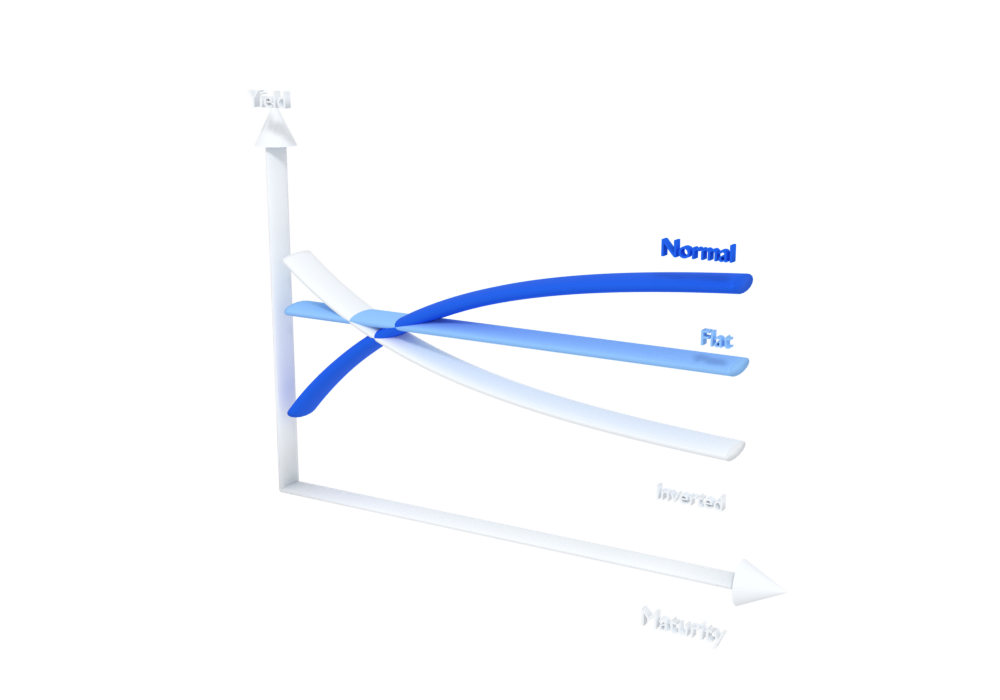
- Reading normal, flat and inverted curves
- Expectations, liquidity-preference and segmentation theories
- Plotting a government curve and reading its shape
- Central-bank policy and the short end of the curve
- Inflation expectations and term premium in long yields
- Example: short yields fall while long yields hold
- Spot rates and discount factors
- Bootstrapping a curve from bond prices in a spreadsheet
- Reading implied forward rates from the curve
Module 4Pricing with Curves and Measuring Return3 hours
Flat and non-parallel curve pricing · floating-rate pricing · inflation-linked bonds · breakeven inflation · total return, carry and roll-down
- Discounting cash flows on a flat curve
- Pricing with spot rates on a non-parallel curve
- Pricing fixed and floating bonds in a spreadsheet template
- How inflation-linked bonds pay
- Real yield and breakeven inflation from market prices
- Example: choosing between a nominal and a linked bond
- Total return: coupon, reinvestment and price change
- Carry and roll-down on an upward-sloping curve
- A total-return worksheet for one holding period
Module 5Duration, Convexity and Embedded Options3 hours
Duration and DV01 · convexity · error of duration-only estimates · call and put options · negative convexity
- Duration and modified duration, step by step
- DV01 and convexity in a spreadsheet
- Example: which bond loses more when yields rise?
- Why duration alone is only an approximation
- Adding the convexity term to the price estimate
- Measuring the error against full repricing
- How a call or put option changes a bond’s price
- Effective duration and convexity by repricing up and down
- Example: why a callable bond stops rising as yields fall
Module 6Credit Quality and Spreads3 hours
Credit ratings · investment grade and high yield · yield spread and Z-spread · spread over a benchmark curve · what drives spreads
- Credit ratings and what the grades mean
- Investment grade versus high yield in a bond screen
- Example: a downgrade and the move in spread and price
- Yield spread to a benchmark
- The Z-spread: one spread added across the whole curve
- Comparing two bonds of similar maturity with spread measures
- What drives spreads: credit quality, liquidity, markets
- Pricing a bond as benchmark curve plus spread
- Example: a one-point spread widening on a five-year bond
Module 7Curve Shifts, Stress Tests and Errors3 hours
Parallel, steepener, flattener and twist · duration and convexity estimates · full repricing · rate and spread stress tests · common pricing errors
- Parallel shifts, steepeners, flatteners and twists
- Estimating value change with duration and convexity
- Full repricing of a portfolio under a steepener
- Designing rate and spread stress scenarios
- Running the scenarios in a portfolio template
- Example: a one-page scenario report for a risk committee
- The usual errors: clean versus dirty, day counts, exact duration
- A review checklist to catch pricing and risk errors
- Worked portfolio case: finding and fixing three errors
Module 8Hedging and Immunization3 hours
Duration-matching hedges · key-rate hedges · residual risk · cash-futures basis · immunization and rebalancing
- Hedging with duration: the idea and the hedge size
- Key-rate exposures and key-rate hedges
- Example: hedging a bond book and measuring what is left
- What the basis is and why it moves
- Tracking the basis in a spreadsheet
- Example: a futures hedge that left part of the loss
- Liabilities and the match: present value and duration
- Building an immunized portfolio in a worksheet
- Rebalancing as rates and time pass
Module 9Reporting, Attribution and the Workbook3 hours
Pricing workbook · reconciling to full repricing · yield, duration, spread and total return · curve, spread and carry attribution · documentation
- Planning a bond pricing workbook
- Valuing a portfolio and repricing under curve shifts
- Reconciling duration estimates to full repricing
- Fixed-income KPIs: yield, duration, spread, total return
- Attribution: separating curve, spread and carry
- Building a one-page fixed-income performance report
- Why valuations must be reproducible
- A documentation template for data, curve choices and limits
- Example: a reviewer rebuilds a valuation from your notes
Module 10Professional Practice and a Full Case4 hours
Fair valuation and price sourcing · conflicts of interest · swaps, futures and options · the analysis template · a full rate-rise case
- Fair valuation and marking a bond position
- Independent price sourcing and a price-challenge log
- Example: handling a conflict of interest in a mark
- How swaps, futures and options extend hedging
- Market-risk and liquidity-risk management on these tools
- Example: a swap or a futures hedge for one bond holding
- The analyst’s bond-analysis template
- Loading real market data and pricing a portfolio
- Risk report and stress run from the template
- The case: a rate rise hits a bond portfolio
- Explaining the loss with duration and convexity
- Explaining the spread effect and writing the case note