
The Complete Project Manager
From vision to execution: build every project management template by hand on real cases from the book, from the business case to closeout.
- 35 hours
- Stage: First job: projects, agile, product
- Language: English
- Voice: English ✔
What you will learn
- Define a project and project management, and place any piece of project work in one of the five PMBOK® process groups.
- Explain how waterfall and the main Agile frameworks plan, deliver and handle change, with their strengths and risks.
- Describe the project manager's responsibilities and skill stack, and build a personal development plan from your own gaps.
- Identify and classify stakeholders, and build a stakeholder register and an attitude heatmap.
Syllabus
Module 1Project Management Foundations3 hours
what a project is · the five process groups · the 12 PMBOK® principles · why projects fail
- What a project is — and what project management adds
- The five process groups — from initiating to closing
- Principles 1–3: stewardship, team and stakeholders
- Principles 4–6: value, systems and leadership
- Principles 7–9: tailoring, quality and complexity
- Principles 10–12: risk, adaptability and change
- Why projects fail (1): unclear goals, scope creep and absent stakeholders
- Why projects fail (2): false timelines, ignored risks and broken communication
- Case lab: diagnose five failures
Module 2Predictive vs. Adaptive Lifecycles2 hours
waterfall phases · Scrum, Kanban, Lean, XP, SAFe®, LeSS · choosing a lifecycle · hybrid
- Waterfall's five disciplined phases
- Waterfall: benefits, risks and best-fit cases
- Scrum and Kanban
- Lean, XP, SAFe® and LeSS
- Choosing the lifecycle — the selection criteria
- Hybrid lifecycles — the Water-Scrum-Fall case
Module 3The Project Manager's Role & Organizational Context2 hours
responsibilities · the skill stack · personal development plan · functional, matrix and projectized structures · culture · project vs. program
- The project manager's role — navigation, not only delivery
- The skill stack and your personal development plan
- Functional, matrix and projectized structures
- Culture — the invisible architecture
- Project vs. program — and PMP, PgMP and MSP
- When projects are not enough — deciding to scale
Module 4Stakeholder & Communication Planning3 hours
stakeholder register · attitude heatmap · power–interest grid · engagement matrix · RACI · communication plan · PR plan
- Who is a stakeholder — and the models that classify them
- The stakeholder attitude heatmap — five zones
- Build the stakeholder register
- Engagement levels and the power–interest grid
- The stakeholder engagement matrix and journeys
- RACI — what R, A, C and I really mean
- Build a RACI matrix
- Build the communication plan
- PR in projects — when communication goes public
Module 5Team Building & Leadership3 hours
team charter · Tuckman's five stages · the five dysfunctions · conflict and negotiation · escalation protocol · motivation
- What a team charter is — and what it isn't
- Build a team charter
- Tuckman's five stages
- Case: five stages in a banking app launch
- The five dysfunctions pyramid
- Case: rebuilding a dysfunctional task force
- The conflict spectrum and interest-based negotiation
- A conflict escalation protocol
- Motivation as a system — autonomy, mastery, purpose
Module 6Project Initiation Documents3 hours
business case · options analysis · ROI · risk & mitigation · benefit realisation · project charter · project brief · kickoff
- The problem statement and options analysis
- ROI and the risk & mitigation table
- Benefit realisation and presenting the case
- The project charter — role, authority and core components
- Build the project charter
- Build the one-page project brief
- Case: the brief that shifted a portfolio
- Design the kickoff meeting
- Run the kickoff and keep alignment
Module 7Detailed Project Planning Techniques4 hours
scope statement · scope creep · work breakdown structure · network diagram · critical path · CPM, PERT, Gantt · crashing and fast-tracking · resource levelling
- Build the scope statement — in and out
- Controlling scope creep
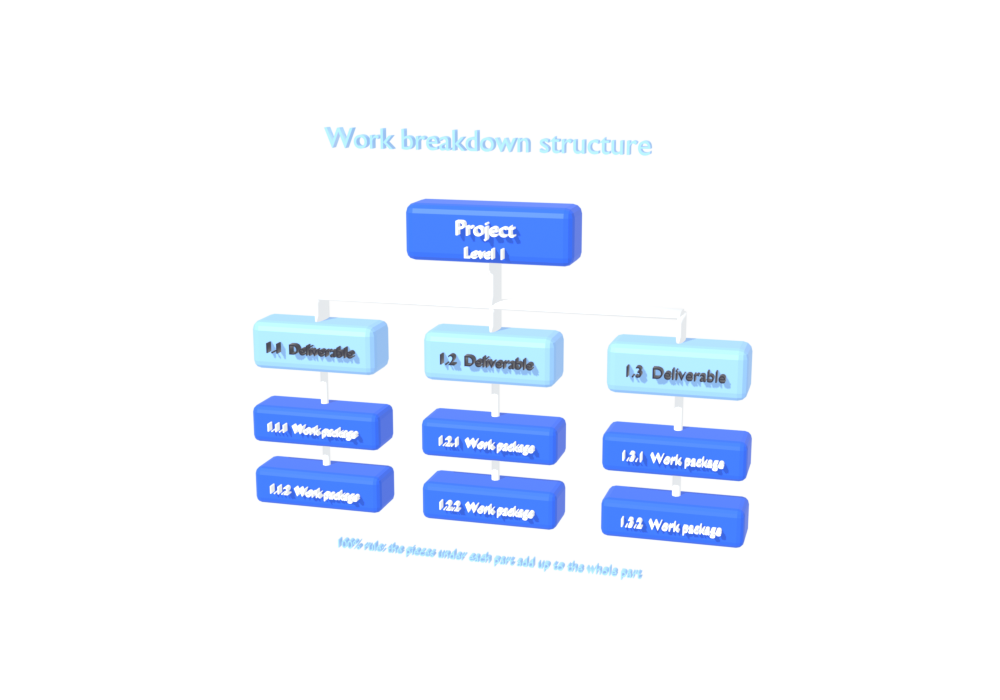
- WBS anatomy — levels and the 100% rule
- Build the WBS: the CRM rollout
- WBS mistakes — the FBI Sentinel case
- Dependencies and network diagrams
- Forward pass, backward pass, float and the critical path
- CPM, PERT and Gantt — choosing the tool
- Crashing, fast-tracking and schedule recovery
- Detecting overload — calendars and effort
- Resource levelling — smoothing the peaks
- The project manager as capacity strategist
Module 8Quality & Earned Value Management3 hours
quality plan · metrics and thresholds · QA vs. QC · PV, EV, AC · SV, CV, SPI, CPI · EAC · dashboards
- Quality planning — standards and traceability
- Build the quality plan — metrics and thresholds
- QA vs. QC — two lines of defence
- Case: two functions, one failure — Deepwater Horizon
- PV, EV and AC — the three baseline numbers
- SV, CV, SPI and CPI — reading the signals
- Forecasting with EAC
- Thresholds and triggers
- Build the project dashboard
Module 9Risk Management & Response2 hours
SWOT · identification techniques · risk register · 5×5 risk matrix · response strategies · risk reviews
- Risk identification techniques — SWOT and more
- From fragments to a structured register
- Choosing the response and keeping risk visible
- The 5×5 risk matrix — likelihood and severity
- Build the risk register
- Response strategies and risk governance
Module 10Execution, Monitoring & Control2 hours
project dashboard · removing roadblocks · storytelling in reports · change request workflow · approval decision
- The dashboard as the project's pulse
- Removing roadblocks
- Storytelling in stakeholder reports
- Change requests — submission and impact review
- The approval decision
- Communicating change — the full workflow
Module 11Adaptive Project Management in Action3 hours
backlog and sprint goal · capacity and commitment · stand-ups · burndown · sprint review · retrospective · hybrid · rolling-wave planning
- Backlog, sprint goal and the PM vs. the Scrum Master
- Sprint planning — capacity and commitment
- Stand-ups and the burndown
- The sprint review
- The retrospective
- Data-driven retrospectives
- Hybrid delivery — the principles
- Build the rolling-wave plan
- Case: the Boeing 787 hybrid approach
Module 12Project Closure & Continuous Improvement2 hours
closeout checklist · post-mortem and lessons learned · handover · PMO functions and governance · career roadmap
- Formal closeout procedures
- Post-mortem and lessons learned
- Knowledge transfer and handover — the Crossrail case
- PMO functions and governance models
- The PMO as a value driver
- Your career roadmap and certification path
Module 13Capstone — Your Complete Project File3 hours
one real project from business case to closeout · every template · your downloadable project file
- The capstone project and your business case
- Charter, brief and kickoff
- Stakeholders, RACI and communication
- Scope and WBS
- Schedule and resources
- Quality and risk
- Control: earned value, dashboard and change
- Sprints and the hybrid plan
- Close and download your project file